10/10
7/10
6/10
10/10
9/10
10/10
The Apartment as Mind: Architecture of Psychological Collapse
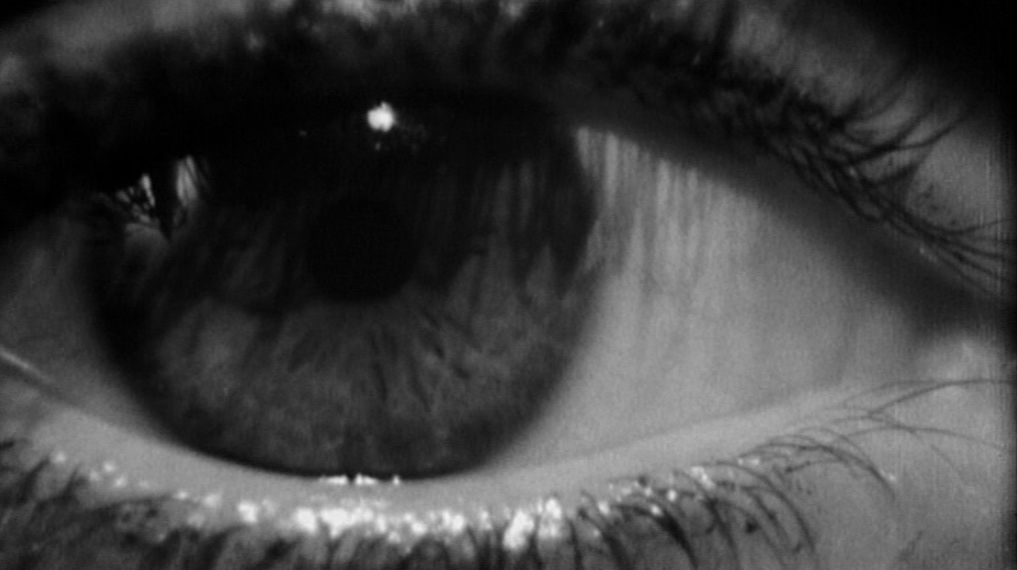
Roman Polanski's Repulsion doesn't simply chronicle a mental breakdown—it becomes one, transforming cinema itself into an instrument of psychological torment that leaves audiences feeling complicit in watching a human soul disintegrate in real time. This is horror as pure interiority, a masterpiece of claustrophobic terror that demonstrates how the most frightening monsters are often the ones that live inside our own minds. More than half a century after its release, Repulsion remains the gold standard for psychological horror, a film that proves the genre's capacity for serious artistic expression while delivering scares that feel genuinely dangerous.
The film's genius lies in Polanski's decision to trap audiences inside Carol's deteriorating mental state, using every cinematic tool at his disposal to make us experience her psychosis from the inside. We don't simply watch Carol lose her grip on reality—we lose our grip alongside her, as the apartment walls begin to crack, hands emerge from plaster, and the distinction between internal and external reality completely dissolves.
Catherine Deneuve delivers what may be the greatest performance in horror cinema history as Carol Ledoux, a young Belgian woman living in London whose repulsion toward male sexuality catalyzes a complete psychological collapse. Deneuve's portrayal is a masterclass in internal acting, conveying Carol's mental state through micro-expressions, physical posture, and a gradual retreat from human connection that becomes genuinely heartbreaking to witness. Watch how she uses her legendary beauty as both shield and weapon, her ethereal appearance masking depths of psychological damage that only become visible as the film progresses.
The supporting performances create a vivid ecosystem of unwanted male attention and female vulnerability. Ian Hendry as Michael and John Fraser as Colin represent different forms of masculine intrusion, while Yvonne Furneaux as Helen embodies the kind of sexual openness that Carol finds both fascinating and repulsive. These characters aren't simply plot functions—they're authentic human beings whose ordinary interactions with Carol become increasingly threatening as her mental state deteriorates.
Polanski's visual language represents one of cinema's most sophisticated achievements in subjective horror. Working with cinematographer Gilbert Taylor, he transforms Carol's South Kensington apartment into a living organism that responds to her psychological state. The famous wide-angle lens distortions don't feel like stylistic flourishes—they feel like accurate representations of how spaces appear when filtered through severe mental illness. As Carol's condition worsens, the apartment literally begins to decay and expand, walls cracking and corridors stretching into impossible dimensions.
The film's use of practical effects to visualize psychological states remains remarkably effective decades later. The hands that emerge from walls, the expanding hallways, the cracking plaster—these aren't supernatural manifestations but external representations of internal collapse. Polanski understands that mental illness can make the familiar world seem genuinely alien and threatening, and his visual approach makes these subjective experiences feel viscerally real.
The sound design deserves particular recognition for its restraint and precision. Rather than relying on obvious musical cues, the film creates atmosphere through ambient sounds that become increasingly distorted and threatening. The ticking of clocks, the dripping of water, the sounds of neighboring apartments—all become instruments of psychological pressure as Carol's isolation deepens. When music does appear, it feels intrusive and unwelcome, another form of external pressure on Carol's fragile psyche.
The film's production design creates a world that feels both authentically 1960s London and timelessly claustrophobic. The apartment, with its cramped spaces and thin walls, becomes a perfect representation of how modern urban living can create isolation rather than community. The beauty salon where Carol works provides no escape from male attention, while the London streets become increasingly threatening as her paranoia intensifies.
Repulsion's treatment of female sexuality and male aggression remains remarkably ahead of its time, exploring themes that contemporary feminism is still grappling with. Carol's repulsion toward sexuality isn't presented as prudishness or religious conditioning—it feels like genuine trauma response, suggesting experiences that the film wisely never makes explicit. The film's men aren't obviously villainous, but their persistent attention to an obviously distressed woman creates a atmosphere of low-level threat that feels authentically oppressive.
The film's exploration of urban isolation captures something essential about modern existence—the way dense population can create profound loneliness, how being surrounded by people can actually intensify feelings of alienation. Carol's breakdown occurs not in some Gothic mansion or isolated countryside, but in the heart of one of the world's great cities, surrounded by neighbors who never quite become human connections.
Polanski's direction maintains perfect control throughout, never allowing the film to tip into exploitation despite its increasingly extreme content. He treats Carol's breakdown with clinical precision while maintaining deep empathy for her suffering. The violence, when it comes, feels like inevitable consequence rather than sensational payoff, emerging naturally from the psychological pressures that have been building throughout the film.
The famous rabbit sequence, where Carol forgets to dispose of her sister's boyfriend's dead rabbit, becomes a perfect metaphor for how depression and mental illness can make basic self-care impossible. The decaying rabbit isn't simply a gross-out effect—it's a visual representation of how Carol's mental state is affecting her ability to maintain her environment and, by extension, herself.
The film's climactic acts of violence feel both shocking and psychologically authentic, the logical conclusion of pressures that have been mounting throughout Carol's isolation. Polanski presents these moments without sensationalism, focusing on their psychological reality rather than their physical impact. The aftermath, showing Carol's complete disconnection from reality, becomes genuinely disturbing because it feels emotionally authentic rather than exploitative.
Repulsion's ending, with its revealing photograph and suggestion of childhood trauma, provides context without offering easy explanations. The film understands that mental illness rarely has simple origins or solutions, that understanding someone's damage doesn't necessarily provide the tools to heal it.
The film's themes of sexual trauma, urban isolation, and mental illness feel more relevant than ever in an era of increased awareness about psychological health and gender-based violence. Polanski created a work that functions as both supernatural thriller and serious psychological study, demonstrating horror's unique capacity to make internal states visible and visceral.
The technical execution remains flawless nearly six decades later, with practical effects and cinematographic techniques that feel more convincing than many contemporary digital achievements. The film's commitment to psychological realism over supernatural spectacle creates horror that feels genuinely dangerous rather than simply entertaining.
Repulsion stands as perhaps the greatest achievement in psychological horror, a film that doesn't simply frighten but fundamentally alters how we think about mental illness, female vulnerability, and the thin line between sanity and madness. It's a work that honors both the complexity of psychological trauma and the power of cinema to make internal experiences externally visible. In a genre often content with surface-level scares, Polanski created something that penetrates to the core of human psychology, revealing the monsters that live not in dark places but in damaged minds.