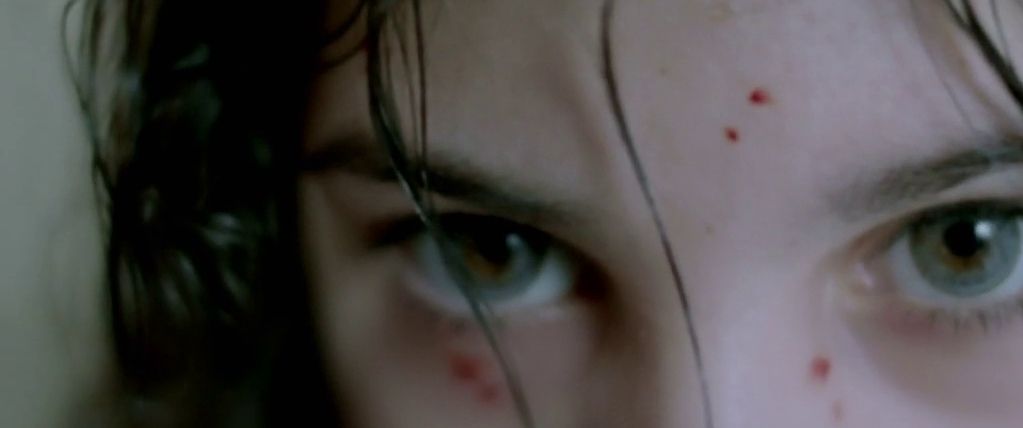
Directed by Tomas Alfredson
9/10
4/10
8/10
9/10
10/10
10/10
Love in the Time of Vampires: Horror as Tender Brutality
Tomas Alfredson's Let the Right One In accomplishes something remarkable—it transforms the vampire film into an achingly tender meditation on loneliness, first love, and the violence we're willing to commit for connection. This Swedish masterpiece doesn't simply revitalize tired genre conventions; it fundamentally reimagines what vampire horror can express about human need and the darkness that lives inside even the most innocent-seeming relationships. Set against the perpetual winter of 1980s suburban Stockholm, the film creates a world where coldness is both literal and emotional, where two damaged souls find each other in the darkness and form a bond that is simultaneously beautiful and deeply, profoundly disturbing.
The film follows Oskar, a bullied twelve-year-old boy, and Eli, the mysterious child who moves in next door and may or may not be twelve years old herself. Alfredson, adapting John Ajvide Lindqvist's novel, understands that the most effective horror often emerges from the spaces between genre expectations and emotional authenticity. Let the Right One In works as both a legitimate vampire film and a devastatingly accurate portrait of adolescent alienation, never allowing either element to overwhelm the other.
Kåre Hedebrant as Oskar delivers one of cinema's most naturalistic portrayals of childhood trauma and rage. Hedebrant captures the particular vulnerability of a boy who has learned that the world is hostile and is beginning to fantasize about fighting back. His Oskar is neither victim nor hero but something more complex—a child whose capacity for violence is being awakened by constant torment, making him the perfect companion for a creature that survives through killing.
Lina Leandersson's performance as Eli is nothing short of extraordinary, creating a character who feels simultaneously ancient and childlike, predatory and innocent. Leandersson navigates the role's impossible contradictions with remarkable sophistication, making us believe in Eli as both a twelve-year-old child and a centuries-old vampire. Watch how she modulates between moments of genuine affection for Oskar and flashes of something far more alien and dangerous. The performance works because Leandersson never lets us forget that beneath Eli's childlike exterior lurks something fundamentally inhuman.
Alfredson's visual language is masterful in its restraint and precision. Cinematographer Hoyte van Hoytema creates a world of perpetual twilight, where the snow-covered Stockholm suburbs become a kind of purgatory—neither fully urban nor rural, neither day nor night. The color palette of whites, grays, and occasional splashes of red creates a visual environment that feels drained of warmth and life, the perfect setting for a story about two beings existing on society's margins.
The film's approach to framing is particularly sophisticated, frequently positioning characters in long shots that emphasize their isolation within vast, empty spaces. Oskar is often shown alone in courtyards or playgrounds, dwarfed by his surroundings, while the film's frequent use of static camera positions creates a sense of patient observation rather than active participation. We're watching these events unfold with the same removed curiosity that Eli watches the human world.
The sound design and Johan Söderqvist's score create an atmosphere of hushed menace and melancholy beauty. Rather than traditional horror orchestration, the music incorporates ambient sounds and minimalist compositions that emphasize the cold isolation of the setting. The film uses silence as effectively as any sound, allowing the crunch of snow underfoot or distant traffic to become part of its sonic landscape.
Let the Right One In's treatment of violence deserves particular recognition for its unflinching yet never exploitative approach. When violence occurs, it feels shocking precisely because it erupts from such careful atmospheric buildup. The famous pool sequence represents one of horror's most perfectly executed set pieces—suspenseful, brutal, and emotionally resonant all at once. The decision to show the violence primarily through underwater perspective creates both distance and intimacy, making us experience Oskar's terror while simultaneously witnessing his salvation.
The film's exploration of bullying is remarkably nuanced, avoiding both simple victim narratives and easy moralizing. The bullies are portrayed as genuinely threatening without being cartoonish, their escalating violence feeling sickeningly real. Alfredson understands that childhood cruelty can be just as devastating as adult violence, and that the scars it creates can fundamentally alter a person's relationship with the world.
The relationship between Oskar and Eli operates on multiple levels simultaneously—as genuine friendship, as first love, as symbiotic survival partnership, and as something far more disturbing that the film wisely never makes entirely explicit. The ambiguity about Eli's past and true nature, combined with the film's hints about the relationship between Eli and Håkan (her adult caretaker), adds layers of complexity that invite interpretation without providing easy answers.
Alfredson's direction maintains perfect tonal control throughout, never allowing the film to become either too sentimental or too cynical. He treats both the horror elements and the romance with equal seriousness, understanding that effective genre cinema requires commitment to emotional truth rather than simple adherence to convention.
The film's production design creates a world that feels both historically specific and timelessly isolated. The 1980s setting is established through subtle details rather than obvious period markers, while the brutalist architecture of the Stockholm suburbs becomes a physical manifestation of the characters' emotional isolation.
Let the Right One In's themes of isolation, otherness, and the violence inherent in survival feel urgently contemporary despite the period setting. The film explores how society creates its own monsters through systematic exclusion, how loneliness can make us willing to accept companionship from almost any source, and how love and destruction can become impossibly intertwined.
The supporting performances create a vivid world of adult failure and disconnection. The adults in Oskar's life—his divorced parents, his neglectful neighbors—are all too absorbed in their own problems to recognize his suffering, creating a void that Eli fills with both affection and terrible purpose.
The film's ending, with Oskar and Eli departing together, provides a conclusion that is simultaneously hopeful and deeply unsettling. We want Oskar to escape his tormenters and find happiness with the one person who truly understands him, yet we can't ignore the implications of what their future relationship will require. The final images of Morse code communication through a train compartment wall suggest both genuine connection and the beginning of a cycle that will likely repeat what we've seen between Eli and Håkan.
Let the Right One In stands as proof that horror cinema can achieve genuine artistic significance while maintaining genre integrity. Alfredson has created a film that works perfectly as vampire horror, coming-of-age drama, and meditation on loneliness and connection. It's a work that trusts audiences to engage with moral complexity rather than simple answers, that finds beauty in darkness without romanticizing its horror.
In a genre often content with familiar archetypes and easy scares, Let the Right One In demonstrates what can be achieved when filmmakers approach horror with sophistication, empathy, and genuine artistry. It's a masterpiece that proves the vampire film still has profound truths to tell about human nature, if we're willing to follow it into the cold darkness where the most honest connections are sometimes formed.