Directed by Philip Kaufman
10/10
6/10
7.5/10
10/10
9/10
10/10
The Death of Self: Paranoia as Perfect Horror
Philip Kaufman's Invasion of the Body Snatchers doesn't simply remake Don Siegel's 1956 classic—it transforms it into something far more disturbing and psychologically complex, a masterpiece of paranoid horror that captures the specific anxieties of post-Watergate, post-Vietnam America while creating a work of such sustained dread that it feels genuinely dangerous to watch. This is science fiction horror at its most sophisticated and unnerving, a film that uses alien invasion as metaphor for every fear about losing individual identity in an increasingly conformist and surveilled society.
The genius of Kaufman's approach lies in his recognition that the most effective horror comes from the gradual erosion of everything we take for granted about human nature and social connection. The pod people aren't obviously monstrous—they look exactly like the people they've replaced, speak the same words, perform the same functions. The horror emerges from subtle wrongness, the slow realization that the fundamental spark that makes someone human has been extinguished and replaced with something that merely mimics humanity.
Donald Sutherland delivers one of horror cinema's most perfectly calibrated performances as Matthew Bennell, a health inspector whose professional skepticism becomes both weapon and liability in the face of an impossible threat. Sutherland navigates Matthew's journey from rational disbelief to desperate paranoia with such naturalistic precision that we experience every stage of his psychological deterioration. His famous final scene—that pointing gesture and inhuman shriek—represents one of cinema's most effective betrayals of audience trust, a moment that recontextualizes everything we've experienced and leaves us with nowhere safe to retreat.
The supporting performances create a vivid ecosystem of urban alienation and mounting terror. Brooke Adams as Elizabeth brings vulnerability and intelligence to what could have been a simple victim role, while Leonard Nimoy's Dr. Kibner provides the film's most chilling portrait of how authority figures can become instruments of oppression while maintaining facades of helpful concern. Jeff Goldblum and Veronica Cartwright as Jack and Nancy represent ordinary people caught in extraordinary circumstances, their naturalistic chemistry making their fate feel genuinely tragic.
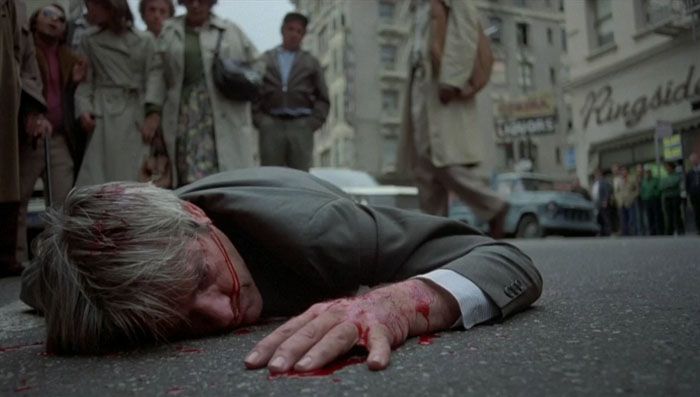
Kaufman's visual language creates a San Francisco that feels both recognizably real and subtly nightmarish. Working with cinematographer Michael Chapman, he transforms the city's familiar landscapes into spaces of mounting unease, where every crowd scene becomes potentially threatening and every quiet moment suggests impending danger. The film's use of urban spaces—particularly the health department offices and the various apartments where characters attempt to hide—creates a sense that nowhere is truly safe, that the invasion has made every familiar space potentially hostile.
The film's approach to body horror demonstrates masterful restraint, showing just enough of the pod transformation process to be genuinely disturbing without becoming exploitative. The birth sequences, where the pods create their human duplicates, achieve their power through suggestion and implication rather than graphic imagery. The partially formed duplicates, with their not-quite-human features, tap into fundamental uncanny valley fears about the boundaries between human and non-human.
Denny Zeitlin's score deserves recognition as one of horror's most effectively unsettling musical achievements, combining traditional orchestral elements with electronic manipulation to create soundscapes that feel both familiar and wrong. The music doesn't simply create atmosphere—it becomes part of the film's exploration of how the familiar can become threatening, how the sounds of normal urban life can be transformed into instruments of terror.
The film's production design creates a world that feels authentically 1970s while remaining timelessly relevant. The San Francisco setting, with its mix of counterculture idealism and urban decay, provides the perfect backdrop for a story about conformity overcoming individuality. The pods themselves become grotesque parodies of natural growth, their organic forms suggesting corruption of life's most basic processes.
Invasion of the Body Snatchers' treatment of its science fiction elements demonstrates sophisticated understanding of how genre concepts can serve deeper thematic purposes. The alien invasion isn't presented as spectacular warfare but as insidious replacement, a process so gradual and subtle that resistance becomes almost impossible to organize. This approach makes the threat feel more psychologically real than any number of laser battles could achieve.
The film's exploration of paranoia feels remarkably prescient, anticipating contemporary anxieties about surveillance, social media manipulation, and the erosion of individual privacy. Matthew's growing isolation as he realizes that he can't trust anyone around him speaks to fundamental fears about living in societies where authentic human connection becomes increasingly difficult to maintain or verify.
The famous final act, set largely at night in various San Francisco locations, represents one of horror cinema's most sustained exercises in mounting dread. Kaufman builds tension through careful pacing and accumulating details rather than obvious scares, creating sequences where the characters' attempts to remain undetected become almost unbearably tense. The film understands that the most effective horror often comes from the fear of being discovered rather than from actual confrontation.
The film's treatment of sleep as vulnerability taps into one of humanity's most primal fears—the terror of being helpless and unconscious while danger approaches. The characters' desperate attempts to stay awake transform a basic biological need into a source of constant threat, making the audience acutely aware of their own vulnerability during this most basic human activity.
Kaufman's direction maintains perfect control throughout, never allowing the film to tip into either camp or heavy-handed allegory despite its high-concept premise. He treats the science fiction elements with complete seriousness while grounding them in recognizable human emotions and relationships. The result is a film that works both as visceral thriller and serious social commentary.
The film's ending remains one of cinema's most effectively hopeless conclusions, a finale that refuses any comfort or possibility of escape. The revelation that Matthew has been replaced transforms him from protagonist to antagonist in a single gesture, while his betrayal of Nancy eliminates any possibility of romantic or heroic resolution. It's an ending that honors the film's thematic commitments while delivering genuine shock.
Invasion of the Body Snatchers' themes of conformity, identity loss, and social paranoia feel more relevant than ever in an era of social media echo chambers, political polarization, and increasing surveillance. Kaufman created a work that functions as both supernatural thriller and urgent warning about the dangers of sacrificing individuality for the comfort of belonging to the group.
The film's technical execution remains impressive decades later, with practical effects and atmospheric cinematography that feel more convincing than many contemporary digital spectacles. The pod transformation sequences achieve their power through careful staging and in-camera techniques rather than obvious special effects, creating moments that feel genuinely organic and disturbing.
Invasion of the Body Snatchers stands as one of horror cinema's most perfectly realized paranoid thrillers, a work that demonstrates the genre's capacity for serious social commentary while never forgetting its primary obligation to terrify and unsettle. Kaufman created a film that doesn't simply frighten—it fundamentally challenges assumptions about human nature, social connection, and the price of survival in an increasingly hostile world. In a genre often content with surface-level scares, this remains a masterpiece of psychological complexity and sustained dread that proves horror's unique power to make literal our deepest fears about losing ourselves in the crowd.