Directed by Michael Haneke
10/10
0/10
8/10
10/10
10/10
10/10
The Banality of Oblivion: Middle-Class Annihilation as Art
Michael Haneke's The Seventh Continent may seem like an unlikely entry in horror cinema's canon—there are no monsters, no supernatural threats, no masked killers lurking in shadows. Yet this unflinching portrait of a middle-class Austrian family's methodical self-destruction represents horror in its purest, most disturbing form: the systematic annihilation of everything we're told gives life meaning, executed with the same mundane efficiency we bring to our daily routines. This is existential horror as clinical observation, a film that doesn't need ghosts or demons because it understands that the most terrifying abyss is the one that opens up within seemingly ordinary lives.
Haneke's debut feature announces the arrival of a filmmaker willing to push audiences to their absolute limits, not through graphic violence or cheap shocks, but through sustained, unflinching observation of human behavior stripped of all comforting illusions. Based on a true story of familial murder-suicide, the film transforms its source material into something that feels less like conventional narrative and more like watching a meticulous experiment in how far human beings can detach from the systems meant to give their existence purpose.
The film is structured across three years—1987, 1988, and 1989—each segment revealing the gradual erosion of the Schober family's connection to life itself. Georg and Anna and their young daughter Evi appear, at first, to be the epitome of successful modern existence: comfortable home, stable jobs, the trappings of middle-class achievement. But Haneke's camera refuses to grant them the dignity of traditional dramatic presentation, instead fragmenting their lives into a series of repetitive close-ups of mundane actions—hands washing dishes, feet stepping into shoes, eyes staring at television screens.
The performances by Dieter Berner and Birgit Doll as Georg and Anna achieve something remarkable: complete authenticity in portraying emotional vacancy. They don't play their characters as depressed or disturbed in conventional ways; instead, they embody people who have somehow fallen out of sync with the very idea of living. Every gesture feels automatic, every smile forced, every interaction a performance of normalcy that no longer contains any genuine feeling. Young Leni Tanzer as Evi delivers a performance of heartbreaking naturalism, her character's gradual understanding that something is profoundly wrong creating some of the film's most devastating moments.
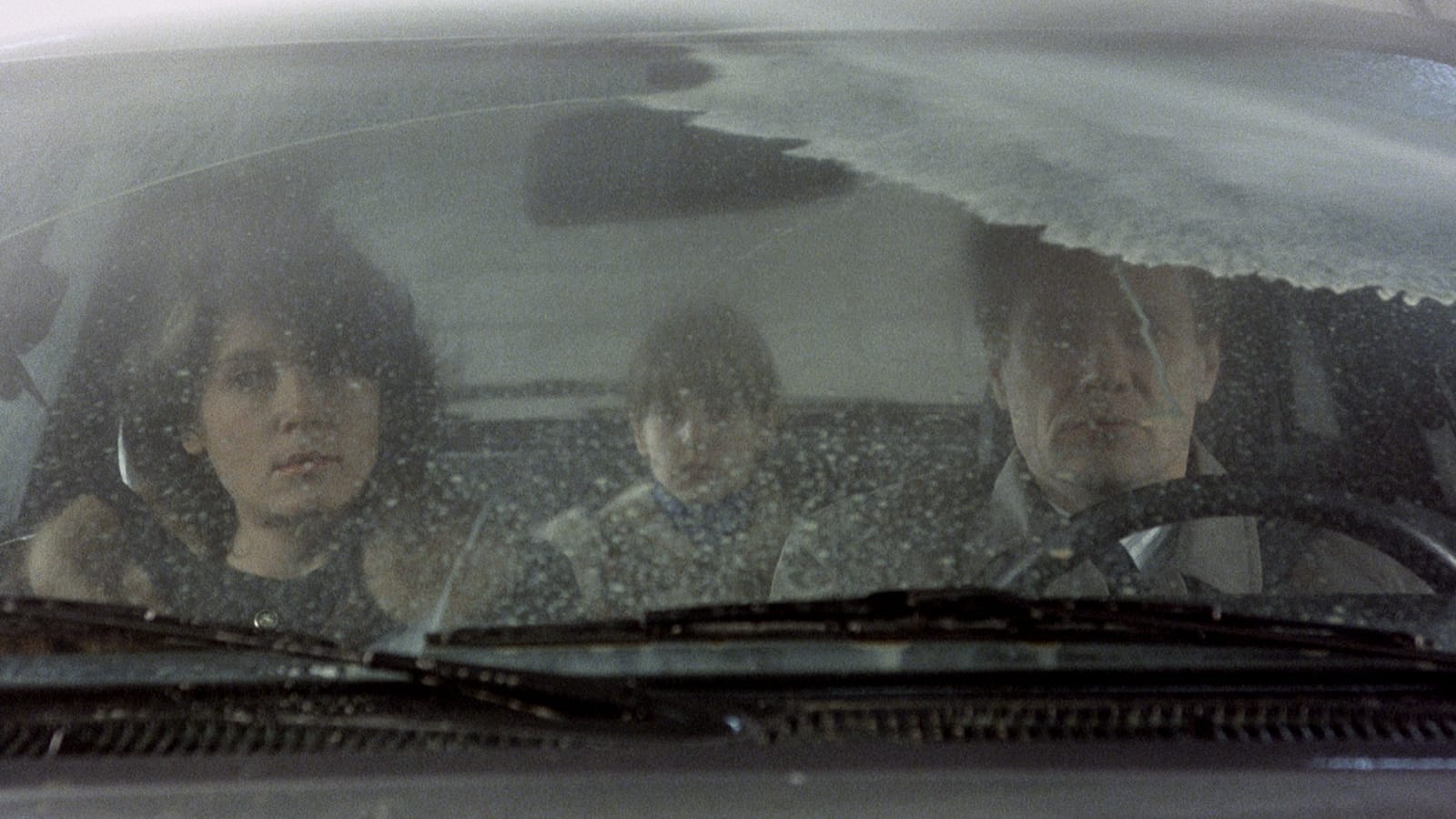
Haneke's visual language is revolutionary in its austere precision. Working with cinematographer Anton Peschke, he creates a world of fragmentary close-ups and detached observation that refuses emotional manipulation while generating almost unbearable tension. The famous opening sequence—a series of close-ups showing a car going through an automated car wash—establishes the film's central metaphor: human beings treated as objects to be processed through systems, reduced to component parts rather than integrated wholes.
The film's refusal of traditional shot composition becomes its own form of violence. By showing us only fragments—a hand operating a machine, feet walking through doorways, objects being manipulated—Haneke denies us the comforting distance of conventional cinematic framing. We're forced into uncomfortable proximity with these mundane actions, made to feel the weight of repetition that defines modern existence.
The sound design operates as a character in itself, with the mechanical noises of modern life—cars, appliances, industrial processes—creating an audio landscape that feels increasingly oppressive. The film uses minimal music, instead allowing ambient sounds to accumulate until the simple act of watching someone vacuum or wash dishes becomes an exercise in mounting psychological pressure.
The Seventh Continent's treatment of consumer culture represents one of cinema's most devastating critiques of modern capitalism. The family's systematic destruction of their possessions in the film's final act—flushing money down toilets, smashing aquariums, destroying furniture—becomes both literal and metaphorical rejection of the material accumulation that supposedly gives their lives meaning. Haneke forces us to watch these acts in real time, denying any comforting aesthetic distance.
The film's exploration of family dynamics reveals how domestic spaces can become sites of quiet psychological violence. The repetitive routines, the forced cheerfulness, the inability to communicate genuine emotion—all suggest a family that has learned to perform togetherness while experiencing profound isolation. The famous scene where the daughter pretends to be blind at school becomes a desperate attempt to force some authentic response from a world that seems to run on automation.
Haneke's direction maintains absolute control throughout, never allowing the film to tip into melodrama or offer easy psychological explanations. He presents the family's decision to die with the same matter-of-fact observation he brings to their daily routines, suggesting that their final act represents not madness but perhaps the only logical response to the emptiness they've discovered at the heart of their existence.
The film's structure—dividing the narrative into distinct years with title cards—creates a sense of documentary objectivity that makes the events feel more rather than less disturbing. We're not being told a story; we're being shown evidence of something that actually happened, stripped of narrative comfort or moral framework.
The final act, which depicts the family's suicide in methodical detail, represents one of cinema's most harrowing sequences. Haneke refuses any aesthetic beautification or emotional manipulation, instead showing the physical reality of death with clinical precision. The scene works not through shock value but through accumulated dread and the absolute absence of the redemption or meaning we've been conditioned to expect from cinema.
The Seventh Continent's themes of alienation, consumer emptiness, and existential despair feel more relevant than ever in our contemporary moment of social media performance and material accumulation as substitute for genuine connection. Haneke created a work that functions as both specific cultural critique of late 20th-century European society and universal meditation on what happens when human beings lose their connection to anything that might justify continued existence.
The film's technical execution is flawless throughout, with every formal choice serving the thematic concerns. The fragmented cinematography, the ambient sound design, the performances drained of traditional emotional markers—all combine to create an experience that feels genuinely disturbing precisely because it refuses the comfort of conventional horror movie distance.
The Seventh Continent operates at the absolute edge of what horror cinema can be, proving that true terror doesn't require supernatural elements or graphic violence. Instead, Haneke demonstrates that the most profound horror comes from recognizing the void that might exist beneath our daily routines, the possibility that all our busy-ness and accumulation serves only to distract us from confronting the fundamental meaninglessness we've chosen not to see.
This is horror as philosophical inquiry, a film that doesn't simply frighten but fundamentally challenges our assumptions about what gives life value. Haneke has created something genuinely transgressive—not through violation of moral codes, but through unflinching honesty about human despair. In a genre often content with providing cathartic scares, The Seventh Continent offers no catharsis, no comfort, no reassuring resolution. It simply observes, with terrible clarity, what happens when people stop pretending that their lives have meaning.
The film stands as one of cinema's most challenging and essential works, a piece that proves horror's capacity to address the deepest existential questions while creating an experience that genuinely disturbs on the most fundamental level. It's a masterpiece that honors neither genre conventions nor audience expectations, demanding instead that we confront uncomfortable truths about modern existence and the fragility of everything we tell ourselves makes life worth living.