Directed by Na Hong-jin
10/10
6/10
8/10
10/10
10/10
10/10
The Devil in the Details: A Masterpiece of Moral Ambiguity
Na Hong-jin's The Wailing doesn't simply haunt—it possesses, burrowing so deeply into the psyche that it fundamentally alters how we process fear, faith, and the terrible weight of parental responsibility. This is horror as existential crisis, a film that uses the framework of supernatural thriller to examine the most profound questions about good, evil, and the impossibility of ever truly knowing which is which. At 156 minutes, it's an epic of unease that proves conclusively that the most effective horror comes not from what we see, but from what we can never fully understand.
The film operates as both police procedural and religious allegory, following Jong-goo, a bumbling small-town cop whose investigation into a series of brutal murders gradually transforms into a desperate battle for his daughter's soul. Na Hong-jin's genius lies in how he structures this journey as a series of seemingly straightforward mysteries that reveal themselves to be increasingly complex moral puzzles, each answer raising new questions until we're left in a state of profound uncertainty about everything we thought we knew.
Kwak Do-won delivers one of horror cinema's greatest performances as Jong-goo, creating a character who embodies every parent's worst nightmare—the realization that love alone may not be enough to protect your child from forces beyond comprehension or control. Kwak's portrayal captures the particular agony of a man whose professional competence dissolves in the face of supernatural threat, whose every attempt to help his daughter seems to make things worse. Watch how his physical presence changes throughout the film, from the soft comfort of a middle-aged bureaucrat to the hollow-eyed desperation of a man who has seen too much.
The supporting performances create a vivid ecosystem of moral complexity that refuses easy categorization. Jun Kunimura as the mysterious Japanese stranger brings an otherworldly menace that never tips into obvious villainy, while Hwang Jung-min as the shaman Il-gwang creates a character whose ambiguous motivations become central to the film's exploration of faith and deception. Most remarkably, Chun Woo-hee as the enigmatic woman in white delivers a performance that manages to feel simultaneously protective and threatening, often within the same scene.
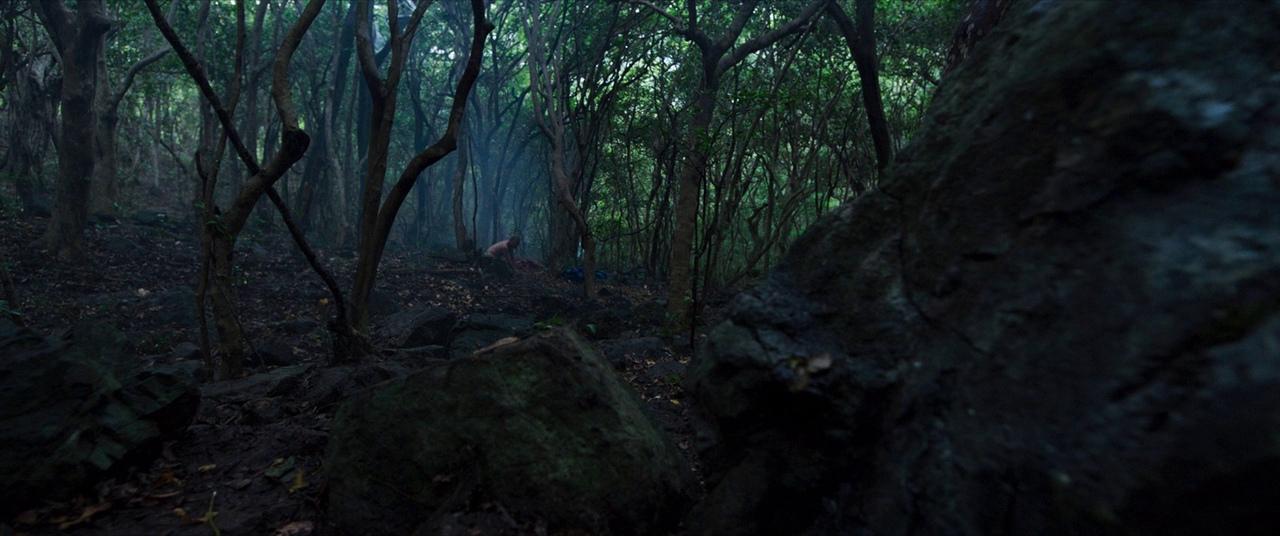
Na Hong-jin's visual language represents one of contemporary cinema's most sophisticated achievements in atmospheric horror. Working with cinematographer Hong Kyung-pyo, he creates a world where the mundane Korean countryside becomes a landscape of spiritual warfare. The film's use of natural light and weather creates an environment that feels simultaneously beautiful and ominous, where morning mist and mountain forests become characters in their own right.
The film's approach to its supernatural elements demonstrates masterful understanding of how ambiguity can be more terrifying than certainty. Throughout its runtime, The Wailing presents multiple possible interpretations for every supernatural event—is the Japanese man a demon, a victim, or simply a convenient scapegoat? Is the woman in white an angel, a demon, or something else entirely? The film's refusal to provide definitive answers transforms viewing into an active struggle with moral uncertainty.
The sound design deserves particular recognition for its ability to make silence feel threatening and ordinary sounds ominous. The film's use of natural audio—wind through trees, distant thunder, the sounds of rural life—creates an atmosphere where the familiar becomes uncanny. When supernatural elements do manifest, they're often accompanied by sounds that feel organic to the world rather than obviously otherworldly.
The film's exploration of religious themes is particularly sophisticated, examining how different belief systems—Christianity, Buddhism, shamanism—intersect and conflict in contemporary Korea. Rather than favoring one over others, Na Hong-jin presents a world where multiple spiritual realities coexist uncomfortably, where faith becomes both protection and potential trap. The film's famous ritual sequence represents one of cinema's most authentically unsettling depictions of spiritual practice, feeling both genuinely sacred and deeply threatening.
The Wailing's treatment of xenophobia and scapegoating feels urgently relevant, exploring how communities under stress inevitably seek someone to blame for their suffering. The targeting of the Japanese stranger reflects historical tensions while functioning as commentary on how fear transforms neighbors into enemies and strangers into monsters. The film suggests that our tendency to externalize evil may blind us to the darkness within ourselves and our communities.
The film's production design creates a world that feels both specifically Korean and universally recognizable, where modern police stations and traditional mountain shrines exist in uncomfortable proximity. The contrast between urban rationality and rural mysticism becomes a source of ongoing tension, suggesting that modernization hasn't eliminated supernatural threats so much as made them harder to recognize and combat.
Na Hong-jin's direction maintains perfect control over the film's complex tone, never allowing it to tip into either camp horror or pretentious art film territory. He treats every supernatural manifestation with complete seriousness while maintaining the procedural elements that ground the story in recognizable reality. The result is a film that feels both fantastical and absolutely believable.
The film's famous climax, with its parallel cutting between Jong-goo's confrontation with his possessed daughter and the shaman's ritual, represents one of cinema's most perfectly orchestrated sequences of sustained tension. The editing creates a sense that these events are spiritually connected despite their physical separation, while the performances sell the emotional reality of supernatural crisis.
The Wailing's ending remains one of horror's most devastatingly perfect conclusions, a finale that manages to feel both inevitable and shocking, providing resolution while deepening the film's central mysteries. The final revelation about the woman in white recontextualizes everything we've seen while raising new questions about the nature of good and evil, protection and destruction.
The film's themes of parental inadequacy, religious doubt, and moral uncertainty feel both timeless and specifically relevant to contemporary anxieties about protecting children in an increasingly incomprehensible world. Na Hong-jin has created a work that functions as both supernatural thriller and profound meditation on the limits of human understanding and the terrible price of making wrong choices when stakes are absolute.
The technical execution is flawless throughout, with every element serving the film's complex vision without drawing attention to itself. The cinematography, editing, sound design, and production design work in perfect harmony to create a unified experience that feels both epic in scope and intimate in emotional impact.
The Wailing represents the absolute pinnacle of what horror cinema can achieve when combined with serious artistic ambition and cultural specificity. It's a film that doesn't simply frighten—it challenges fundamental assumptions about morality, faith, and the nature of evil itself. The result is a viewing experience that feels genuinely transformative, a work that continues to reveal new depths with each encounter.
This is horror as high art, a film that proves the genre's capacity for genuine profundity while never forgetting its obligation to create lasting unease. The Wailing stands as one of the greatest achievements in contemporary world cinema, a masterpiece that honors both Korean cultural traditions and horror's universal power to explore the darkest corners of human experience. In an era when horror often settles for surface-level scares, Na Hong-jin has created something genuinely haunting in the deepest sense of the word—a film that follows you long after viewing, raising questions that may never find satisfactory answers.