Directed by Tobe Hooper
10/10
7.5/10
9.5/10
9/10
10/10
10/10
The American Nightmare Made Flesh: Raw Terror in the Heart of Darkness
Tobe Hooper's The Texas Chain Saw Massacre doesn't simply scare audiences—it fundamentally alters them, stripping away every comfortable assumption about safety, sanity, and the American dream to reveal something primal and horrifying lurking beneath the veneer of civilization. This is horror at its most elemental and uncompromising, a film that feels less like entertainment and more like surviving a fever dream designed by madmen. Nearly five decades after its release, it remains the gold standard for visceral terror, a work so raw and unfiltered that it seems to have been excavated from some collective unconscious rather than deliberately crafted.
The film's power lies not in its relatively simple plot—five young people encounter a family of cannibalistic killers in rural Texas—but in Hooper's ability to transform this basic scenario into a sustained assault on the senses and psyche. From its opening moments, with that ominous radio broadcast and the grotesque tableau of corpses arranged on a cemetery monument, The Texas Chain Saw Massacre announces itself as something fundamentally different from other horror films. This isn't a movie that wants to entertain you; it wants to traumatize you in the most profound and lasting way possible.
The performances, while not traditionally polished, achieve something more valuable: absolute authenticity in extremis. Marilyn Burns as Sally Hardesty delivers one of horror cinema's most genuinely harrowing portrayals of terror, her final act transformation from college co-ed to primal scream incarnate feeling less like acting and more like documentary footage of someone experiencing genuine psychological breakdown. Burns commits so completely to Sally's descent into madness that watching her becomes almost unbearably intimate. Gunnar Hansen as Leatherface creates an icon of horror through pure physical presence, his hulking, childlike killer feeling both completely inhuman and disturbingly recognizable as the product of severe abuse and isolation.
Hooper's visual language is nothing short of revolutionary, establishing an aesthetic that would influence horror cinema for decades. Working with cinematographer Daniel Pearl, he creates a world that feels sun-bleached and pestilential, where the Texas heat becomes almost another character in the story. The film's documentary-style camerawork makes everything feel uncomfortably real, while the increasingly frantic handheld work during the chase sequences creates a sense of barely controlled chaos that mirrors the characters' psychological states.
The film's approach to violence deserves particular recognition for its sophisticated restraint. Despite its reputation for extreme gore, The Texas Chain Saw Massacre actually shows relatively little graphic violence—its power comes from suggestion, implication, and the characters' (and audiences') reactions to what they're witnessing. The famous meat hook sequence, for example, derives its horror not from explicit imagery but from Sally's screams and our imagination filling in the details. Hooper understands that the most effective violence is often the violence we don't see but can't stop imagining.
The sound design represents one of horror cinema's greatest achievements, creating an auditory landscape that feels like descending into hell. The industrial noise, animal sounds, and mechanical grinding create a symphony of unease that never lets up. Wayne Bell and Hooper's experimental score abandons traditional musical approaches in favor of pure noise—metal scraping against metal, machines grinding, inhuman sounds that bypass rational thought and speak directly to primal fear centers in the brain.
The film's production design creates a world that feels authentically decayed and dangerous. The Sawyer family house becomes a monument to madness, filled with furniture made from human remains and rooms that suggest years of accumulated psychosis. The film's low budget becomes an asset here, forcing creative solutions that feel more genuinely unsettling than any expensive set could achieve. Every surface looks contaminated, every object potentially threatening.
The Texas Chain Saw Massacre's treatment of its cannibal family demonstrates sophisticated understanding of how social commentary can be woven into genre material without becoming heavy-handed. The Sawyers represent the dark side of American self-reliance, a family whose response to economic hardship and social isolation has been to retreat into complete savagery. Their cannibalism isn't presented as exotic evil but as the logical extension of survival instincts pushed beyond all moral boundaries.
The film's exploration of class dynamics remains remarkably prescient, positioning the middle-class protagonists as naive tourists venturing into territory they fundamentally don't understand. The contrast between the clean, optimistic young people and the grotesque, primal family they encounter suggests deeper tensions about American identity—the comfortable suburban reality versus the violent, desperate underbelly that sustains it.
Hooper's direction maintains relentless intensity throughout, never allowing audiences a moment to catch their breath or regain their bearings. The film's pacing feels less like traditional narrative structure and more like a gradual descent into madness, with each successive encounter pushing both characters and viewers further from anything resembling normalcy or safety.
The famous dinner sequence represents one of cinema's most sustained exercises in pure horror, a scene that feels genuinely dangerous to watch. The combination of Sally's hysteria, the family's casual sadism, and the grotesque domestic setting creates something that transcends entertainment to become genuine ordeal. The sequence works because it literalizes every fear about being trapped with people who operate by completely different moral codes.
The film's technical execution, achieved on an impossibly small budget under brutal shooting conditions, represents a triumph of vision over resources. The grainy 16mm photography, guerrilla-style production methods, and genuine Texas locations create an aesthetic that no amount of studio polish could replicate. The film feels authentic because it was made by people who were genuinely suffering during its creation.
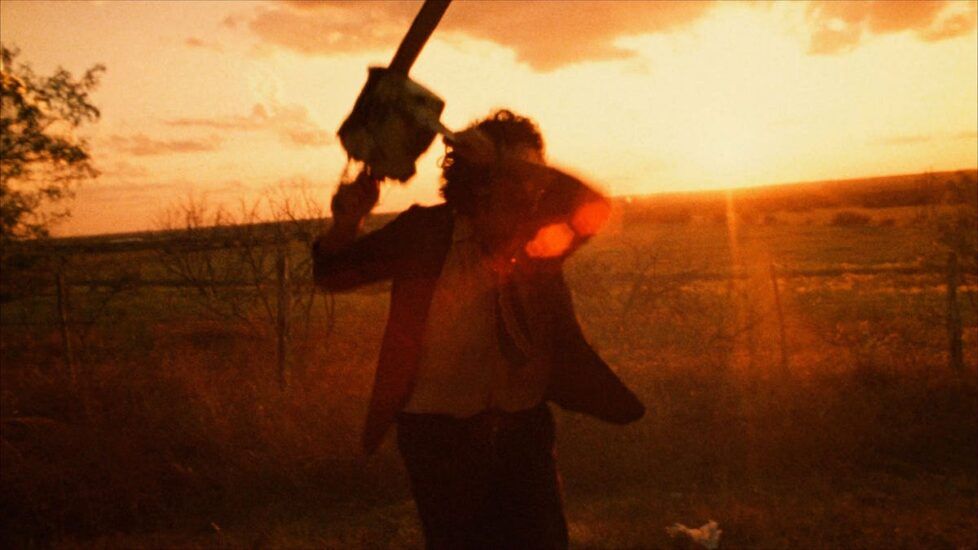
The Texas Chain Saw Massacre's ending, with Sally's escape and maniacal laughter, provides one of horror's most ambiguous conclusions. Her survival feels less like victory and more like a different kind of destruction—she's escaped physical death but at the cost of her sanity and innocence. The final image of Leatherface dancing with his chainsaw in the sunrise suggests that the horror will continue, that what we've witnessed is just one eruption of an ongoing nightmare.
The film's themes of rural decay, family dysfunction, and economic desperation feel more relevant than ever in contemporary America. Hooper created a work that functions as both supernatural thriller and urgent social document, demonstrating horror's unique capacity to make literal the metaphorical damages inflicted by societal breakdown.
The influence of The Texas Chain Saw Massacre on subsequent horror cannot be overstated—it essentially created the template for the slasher genre while establishing new boundaries for what horror cinema could achieve. Yet no subsequent film has matched its raw power or genuine sense of danger. Modern horror often feels safe by comparison, sanitized and focus-grouped where Hooper's film feels genuinely feral.
The Texas Chain Saw Massacre stands as horror cinema's most uncompromising masterpiece, a film that refuses every comfort and courtesy typically extended to audiences. It's a work that doesn't simply frighten—it fundamentally alters your relationship with fear itself, creating an experience so intense and authentic that it becomes part of your psychological landscape. In a genre often content with temporary scares, Hooper created something permanent and transformative, a film that proves horror's capacity to achieve genuine artistic significance while never forgetting its primary obligation to absolutely terrify.